
Dreamscape
30 years of focus on aluminum die-casting parts
CHINESE
+86 13961758770
Dreamscape
30 years of focus on aluminum die-casting parts

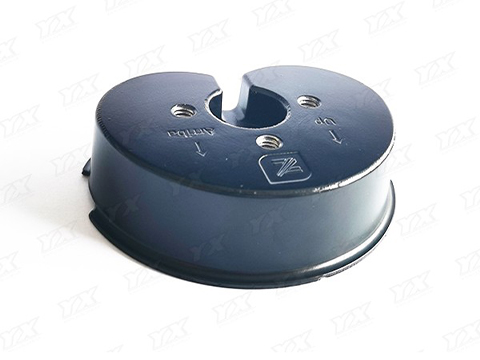
Aluminum die casting photovoltaic bracket discs are widely used in solar mounting structures due to their structural reliability, dimensional accuracy, and production efficiency. As photovoltaic installations expand across commercial rooftops, industrial facilities, and ground-mounted systems, component performance and consistency have become increasingly important.
Structural Strength and Load Capacity
Photovoltaic bracket discs serve as key connecting components within mounting systems. Aluminum die casting allows manufacturers to produce parts with complex geometries while maintaining stable mechanical properties. The die casting process ensures uniform wall thickness and integrated reinforcement ribs, which enhance load distribution under wind and snow conditions.
Compared with traditional fabricated steel components, die-cast aluminum parts can achieve a high strength-to-weight ratio. This balance supports structural integrity without significantly increasing the total system weight.
Corrosion Resistance and Surface Stability
Solar mounting structures are typically exposed to long-term outdoor conditions. Aluminum naturally forms a dense oxide layer on its surface, which provides protection against corrosion in humid or coastal environments.
When combined with surface treatments such as anodizing or powder coating, aluminum die casting photovoltaic bracket discs can maintain surface stability over extended service periods, reducing maintenance frequency.
Dimensional Accuracy and Installation Efficiency
The die casting process enables high dimensional precision and repeatability. Tight tolerances are important for photovoltaic mounting systems, where alignment accuracy directly affects installation speed and structural stability.
Standardized aluminum die-cast discs help reduce on-site adjustments, improving assembly efficiency. This advantage is particularly valuable in large-scale solar projects where labor time and installation consistency influence overall project timelines.
Lightweight Design and Transportation Benefits
Aluminum has a lower density than carbon steel, which reduces component weight. Lighter bracket discs simplify transportation and handling during installation. For rooftop photovoltaic systems, lower structural weight also decreases additional load on building frameworks.
Production Scalability and Cost Control
Die casting is well suited for mass production. Once molds are developed, manufacturers can produce large volumes of photovoltaic bracket discs with consistent quality. This scalability supports stable supply chains for solar mounting system manufacturers and helps maintain predictable production costs in long-term projects.
Conclusion
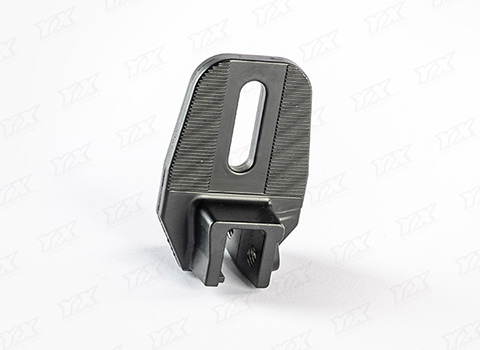
Aluminum die casting photovoltaic bracket discs are preferred in solar mounting structures because they combine structural strength, corrosion resistance, dimensional precision, and manufacturing efficiency. Their material properties and process advantages align with the technical requirements of modern photovoltaic systems, making them a practical solution for both rooftop and ground-mounted installations.
Subscribe Below To Get Regular Updates From Dreamscape!
search
Dreamscape Machinery Technology Co., Ltd
No. 9 Huihe Road, Qianzhou Industrial Park, Huishan District, Wuxi City Jiangsu,P.R.China
Telephone: +86 0510-83382680
E-mail: zhangruyin124@gmail.com
Dreamscape Machinery Technology Co., Ltd
No. 9 Huihe Road, Qianzhou Industrial Park, Huishan District, Wuxi City Jiangsu,P.R.China
Telephone: +86 0510-83382680
We will contact you within 24 hours. ( WhatsApp/facebook:+86 0510-83382680)