
Dreamscape
30 years of focus on aluminum die-casting parts
CHINESE
+86 13961758770
Dreamscape
30 years of focus on aluminum die-casting parts

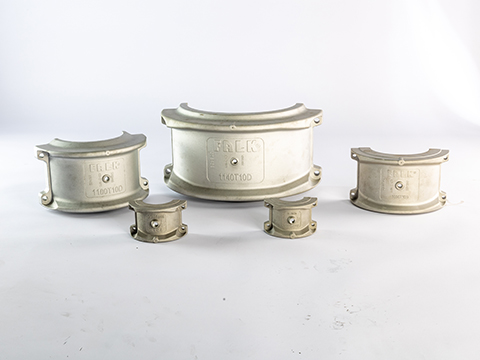
Aluminum die casting couplings are widely used in mechanical power transmission systems to connect two shafts and transmit torque efficiently. Thanks to their light weight, corrosion resistance, and dimensional accuracy, aluminum couplings are common in industries such as automotive, automation, pumps, and industrial machinery. This article explains how aluminum die casting couplings are manufactured, step by step.
1. Mold Design and Development
The manufacturing process begins with mold (die) design. Engineers create a 3D model of the coupling using CAD software, considering:
Torque requirements
Dimensional tolerances
Wall thickness
Shrinkage rate of aluminum alloy
Gate and runner system layout
The die is typically made from high-strength tool steel to withstand high pressure and temperature. Proper mold design is critical because it directly affects surface finish, structural integrity, and production efficiency.
2. Material Selection
Most aluminum die casting couplings are made from aluminum alloys such as ADC12 or A380. These alloys are chosen for:
Excellent fluidity
Good mechanical strength
High corrosion resistance
Good machinability
The alloy is melted in a furnace at temperatures typically between 660°C and 750°C before injection.
3. High-Pressure Die Casting Process
The core manufacturing step is high-pressure die casting. The process involves:
Melting the aluminum alloy in a holding furnace.
Injecting molten aluminum into the steel die cavity at high pressure (usually 1,500–25,000 psi).
Rapid cooling and solidification inside the mold.
Ejecting the casting once it solidifies.
High pressure ensures the molten metal fills all intricate details of the coupling, producing precise shapes and smooth surfaces.
4. Trimming and Surface Treatment
After casting, excess material such as runners, gates, and flash must be removed. This trimming process can be done by:
Mechanical trimming
CNC machining
Grinding
Surface treatments may also be applied, including:
Shot blasting
Sandblasting
Powder coating
Anodizing
These treatments improve corrosion resistance, wear resistance, and overall appearance.
5. Precision Machining
Although die casting provides near-net shape components, additional machining is often required to achieve tight tolerances. Common machining operations include:
Drilling
Boring
Tapping
Keyway cutting
CNC machines ensure accurate bore diameters and concentricity, which are essential for proper shaft alignment and torque transmission.
6. Quality Inspection
Quality control is a critical step in manufacturing aluminum die casting couplings. Inspection methods may include:
Dimensional measurement (CMM)
X-ray inspection for internal porosity
Tensile strength testing
Hardness testing
Only parts that meet engineering specifications proceed to packaging and shipment.
Conclusion
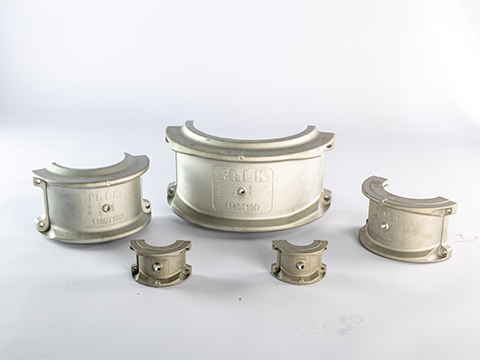
Aluminum die casting couplings are manufactured through a precise and efficient process that includes mold design, alloy melting, high-pressure injection, trimming, machining, and quality inspection. The combination of advanced die casting technology and strict quality control ensures durable, lightweight, and high-performance couplings suitable for demanding industrial applications.
By leveraging modern die casting techniques, manufacturers can produce aluminum couplings with excellent consistency, cost efficiency, and mechanical reliability.
Subscribe Below To Get Regular Updates From Dreamscape!
search
Dreamscape Machinery Technology Co., Ltd
No. 9 Huihe Road, Qianzhou Industrial Park, Huishan District, Wuxi City Jiangsu,P.R.China
Telephone: +86 0510-83382680
E-mail: zhangruyin124@gmail.com
Dreamscape Machinery Technology Co., Ltd
No. 9 Huihe Road, Qianzhou Industrial Park, Huishan District, Wuxi City Jiangsu,P.R.China
Telephone: +86 0510-83382680
We will contact you within 24 hours. ( WhatsApp/facebook:+86 0510-83382680)