
Dreamscape
30 years of focus on aluminum die-casting parts
CHINESE
+86 13961758770
Dreamscape
30 years of focus on aluminum die-casting parts

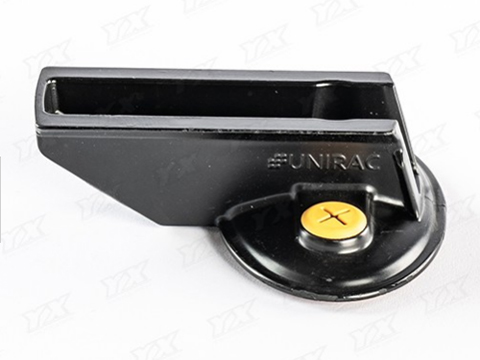
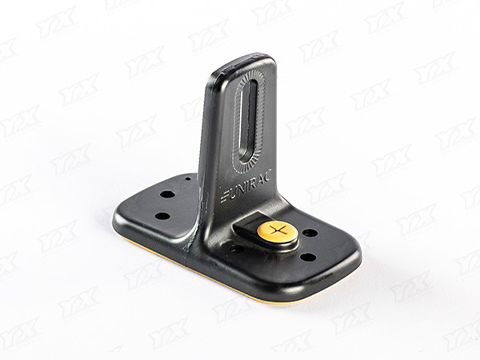
Aluminum die casting photovoltaic bracket discs are key structural components in solar mounting systems. They are typically used at connection nodes where strength, dimensional accuracy, and corrosion resistance are required. Selecting the appropriate aluminum alloy directly affects mechanical performance, casting efficiency, and long-term service stability.
This article outlines the commonly used die casting alloys and analyzes which alloy works best for photovoltaic bracket discs.
Performance Requirements of Photovoltaic Bracket Discs
Photovoltaic bracket discs operate outdoors for extended periods. Therefore, the selected alloy should meet several technical requirements:
Adequate tensile strength and yield strength to support structural loads
Good elongation to reduce the risk of brittle fracture
Strong corrosion resistance in humid or coastal environments
Excellent fluidity for die casting thin-wall or complex geometries
Stable dimensional tolerance and low shrinkage tendency
Balancing mechanical performance and casting characteristics is essential.
Common Aluminum Alloys for Die Casting
1. ADC12 (Al-Si-Cu)
ADC12 is one of the most widely used aluminum die casting alloys. It offers:
Good fluidity and filling ability
High casting efficiency
Stable mechanical properties
Suitable strength for medium-load structural parts
For photovoltaic bracket discs with moderate load requirements, ADC12 provides a cost-effective and technically reliable option. However, its copper content may reduce corrosion resistance compared with low-copper alloys.
2. A380
A380 is similar to ADC12 and commonly used in international markets. Its advantages include:
Balanced strength and ductility
Excellent castability
Good pressure tightness
A380 is suitable for bracket discs that require dimensional precision and moderate structural support.
3. Al-Si-Mg Alloys (Such as A360)
Al-Si-Mg alloys, including A360, offer:
Improved corrosion resistance
Better elongation performance
Lower copper content
These alloys are appropriate for photovoltaic bracket discs installed in high-humidity or coastal regions. Although casting performance is slightly less fluid than ADC12, proper mold design and process control can ensure stable production.
Which Alloy Is More Suitable?
There is no single universal answer. The best alloy depends on application conditions:
For standard ground-mounted solar systems with moderate loads, ADC12 or A380 provides stable performance and efficient mass production.
For coastal or high-corrosion environments, Al-Si-Mg alloys such as A360 offer improved durability.
For projects requiring enhanced mechanical properties, customized alloy formulations with controlled impurity levels may be considered.
In practice, manufacturers should evaluate structural load calculations, environmental exposure, die casting process capability, and post-treatment requirements before final selection.
Conclusion
Selecting the appropriate alloy for aluminum die casting photovoltaic bracket discs requires a technical assessment of mechanical strength, corrosion resistance, and casting performance. ADC12 and A380 are widely used due to their balanced properties and manufacturing efficiency, while Al-Si-Mg alloys provide better corrosion performance in demanding environments.
A systematic evaluation of project requirements ensures stable structural performance and consistent production quality.
Subscribe Below To Get Regular Updates From Dreamscape!
search
Dreamscape Machinery Technology Co., Ltd
No. 9 Huihe Road, Qianzhou Industrial Park, Huishan District, Wuxi City Jiangsu,P.R.China
Telephone: +86 0510-83382680
E-mail: zhangruyin124@gmail.com
Dreamscape Machinery Technology Co., Ltd
No. 9 Huihe Road, Qianzhou Industrial Park, Huishan District, Wuxi City Jiangsu,P.R.China
Telephone: +86 0510-83382680
We will contact you within 24 hours. ( WhatsApp/facebook:+86 0510-83382680)