
Dreamscape
30 years of focus on aluminum die-casting parts
CHINESE
+86 13961758770
Dreamscape
30 years of focus on aluminum die-casting parts
Material selection is a critical factor in medical device manufacturing. From diagnostic imaging systems to portable monitoring equipment and surgical tools, materials must meet strict requirements for strength, precision, corrosion resistance, regulatory compliance, and cost-efficiency. Among various options, aluminum die casting has emerged as a competitive solution. But how does it compare to other commonly used materials such as stainless steel, plastics, and magnesium alloys?
This article provides a professional comparison to help manufacturers make informed decisions.
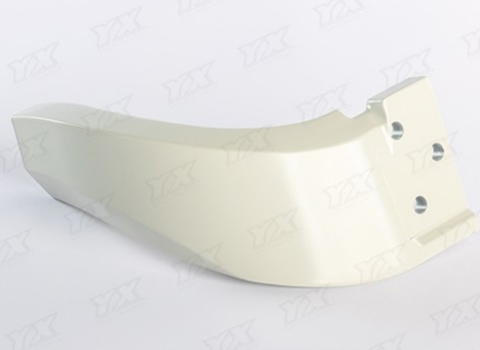
1. Aluminum Die Casting: Key Advantages
Aluminum die casting is a high-pressure manufacturing process that injects molten aluminum into a steel mold to produce complex, near-net-shape components with tight tolerances.
Strength-to-Weight Ratio
Aluminum offers an excellent strength-to-weight ratio. In medical devices—especially portable equipment such as handheld diagnostic tools or mobile imaging systems—reduced weight improves usability without sacrificing structural integrity.
Dimensional Precision
Die casting delivers high dimensional accuracy and repeatability. This is essential for medical device housings, internal structural parts, and enclosures where precise alignment affects performance and safety.
Corrosion Resistance
Aluminum naturally forms a protective oxide layer, enhancing corrosion resistance. With additional surface treatments such as anodizing or powder coating, aluminum components can withstand hospital environments, sterilization cycles, and chemical exposure.
Thermal Conductivity
Compared to plastics and many steels, aluminum provides superior thermal conductivity. This makes it ideal for medical electronics that require efficient heat dissipation, such as power supply housings and imaging equipment frames.
Cost Efficiency in High Volumes
Although tooling costs can be significant, aluminum die casting becomes highly cost-effective in medium-to-high production volumes due to fast cycle times and minimal secondary machining.
2. Comparison with Stainless Steel
Stainless steel is widely used in surgical instruments and implantable devices due to its strength and biocompatibility.
Advantages of Stainless Steel:
Exceptional mechanical strength
Excellent resistance to repeated sterilization
Suitable for direct patient contact
Limitations Compared to Aluminum:
Higher density (heavier components)
More expensive machining processes
Lower thermal conductivity
For structural housings and non-implantable equipment, aluminum die casting often provides a lighter and more economical alternative without compromising durability.
3. Comparison with Plastics (e.g., Engineering Polymers)
Engineering plastics such as ABS, polycarbonate, and PEEK are common in disposable or lightweight medical components.
Advantages of Plastics:
Very lightweight
Electrically insulating
Lower tooling costs for injection molding
Limitations Compared to Aluminum:
Lower mechanical strength
Reduced heat resistance
Limited long-term durability under mechanical stress
For high-performance devices requiring structural rigidity and thermal management, aluminum die casting generally outperforms plastic materials.
4. Comparison with Magnesium Alloys
Magnesium is even lighter than aluminum and is sometimes used in portable medical devices.
Advantages of Magnesium:
Extremely lightweight
Good electromagnetic shielding properties
Limitations Compared to Aluminum:
Higher material cost
Greater susceptibility to corrosion
More complex processing requirements
While magnesium can be beneficial for ultra-light applications, aluminum die casting typically offers a better balance between cost, manufacturability, corrosion resistance, and mechanical performance.
5. Regulatory and Manufacturing Considerations
Medical device manufacturing must comply with strict quality standards such as ISO 13485 and FDA regulations. Aluminum die casting supports these requirements through:
High repeatability and process control
Compatibility with surface finishing and sterilization methods
Traceable material grades
Additionally, aluminum is recyclable, aligning with sustainability initiatives increasingly emphasized in global healthcare manufacturing.
Conclusion
Aluminum die casting offers a balanced combination of lightweight strength, precision, corrosion resistance, thermal performance, and cost efficiency. While stainless steel remains essential for implants and surgical tools, and plastics serve well in disposable or low-load applications, aluminum die casting stands out for structural housings, electronic enclosures, and durable medical equipment components.
For manufacturers seeking high-performance, scalable, and regulatory-compliant solutions, aluminum die casting remains one of the most versatile and competitive material choices in modern medical device production.
Subscribe Below To Get Regular Updates From Dreamscape!
search
Dreamscape Machinery Technology Co., Ltd
No. 9 Huihe Road, Qianzhou Industrial Park, Huishan District, Wuxi City Jiangsu,P.R.China
Telephone: +86 0510-83382680
E-mail: zhangruyin124@gmail.com
Dreamscape Machinery Technology Co., Ltd
No. 9 Huihe Road, Qianzhou Industrial Park, Huishan District, Wuxi City Jiangsu,P.R.China
Telephone: +86 0510-83382680
We will contact you within 24 hours. ( WhatsApp/facebook:+86 0510-83382680)
