
Dreamscape
30 years of focus on aluminum die-casting parts
CHINESE
+86 13961758770
Dreamscape
30 years of focus on aluminum die-casting parts
Aluminum die casting components are widely used in medical devices because they combine structural integrity, dimensional precision, and cost-efficiency. In regulated healthcare environments where reliability and repeatability are non-negotiable, durability is not merely a desirable property—it is a compliance and safety requirement. This article examines the durability of aluminum die casting components in medical applications from a materials engineering, manufacturing, and lifecycle performance perspective.
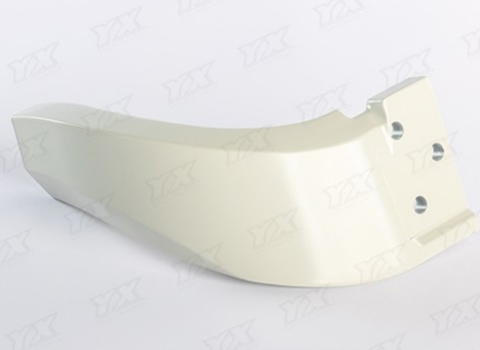
Aluminum die casting is a high-pressure manufacturing process in which molten aluminum alloy is injected into hardened steel molds. The process produces complex geometries with tight tolerances, high surface quality, and excellent reproducibility. In the medical sector, these characteristics make it suitable for housings, frames, heat sinks, brackets, motor casings, imaging system structures, and portable diagnostic device enclosures.
Material Strength and Mechanical Performance
The durability of aluminum die casting components primarily depends on alloy selection and process control. Common alloys used in medical applications include ADC12, A380, and AlSi10Mg. These alloys offer a favorable balance of tensile strength, yield strength, and elongation. For example, A380 aluminum typically provides tensile strengths between 310–345 MPa, making it suitable for load-bearing structures in devices such as patient monitoring systems and imaging equipment.
Die-cast aluminum exhibits excellent compressive strength and sufficient fatigue resistance for applications involving cyclic loading, such as mechanical linkages or adjustable hospital equipment. Although die casting can introduce micro-porosity, modern vacuum-assisted die casting and process optimization significantly reduce internal defects, improving fatigue life and structural reliability.
Corrosion Resistance in Clinical Environments
Medical environments expose devices to humidity, cleaning chemicals, disinfectants, and sterilization agents. Aluminum naturally forms a thin, stable oxide layer that provides inherent corrosion resistance. For enhanced durability, components are often treated with surface finishing technologies such as anodizing, powder coating, or chemical conversion coatings.
Anodized aluminum significantly improves wear resistance and corrosion resistance while maintaining biocompatibility. In hospital settings where frequent wipe-downs with alcohol-based or chlorine-based disinfectants occur, properly finished aluminum die cast parts demonstrate long-term stability without pitting or degradation.
Thermal Stability and Heat Dissipation
Many medical devices generate heat, including imaging systems, diagnostic analyzers, and power management modules. Aluminum has high thermal conductivity (typically around 150–200 W/m·K depending on alloy), enabling efficient heat dissipation. This property prevents thermal stress accumulation and extends the service life of internal electronics.
Compared to polymers or lower-conductivity metals, die-cast aluminum maintains dimensional stability under moderate thermal cycling. This is particularly important in devices such as CT scanners manufactured by organizations like GE HealthCare or imaging platforms developed by Siemens Healthineers, where structural alignment directly affects imaging accuracy.
Impact Resistance and Structural Integrity
Medical devices are often transported, repositioned, or used in mobile contexts. Portable ultrasound systems, infusion pumps, and field diagnostic units must withstand mechanical shock and vibration. Aluminum die cast housings provide higher impact resistance compared to injection-molded plastics while maintaining lighter weight than steel.
The high stiffness-to-weight ratio of aluminum reduces deformation under load. In structural frameworks for surgical equipment or robotic-assisted systems, such as those associated with Stryker Corporation, rigidity ensures operational precision and long-term dimensional stability.
Longevity Under Sterilization and Cleaning Cycles
Durability in medical applications is closely tied to cleaning and sterilization compatibility. While die-cast aluminum is not typically used for direct implantable devices, it is widely used in external structural components that undergo routine disinfection. When properly coated, aluminum die casting components tolerate repeated exposure to UV sterilization, hydrogen peroxide vapor, and alcohol-based cleaning solutions without structural degradation.
However, high-temperature autoclaving (above 120°C) can cause thermal stress in some die-cast alloys if wall thickness and design are not optimized. Therefore, engineering design must account for sterilization protocols during product development.
Design Optimization and Fatigue Considerations
The durability of aluminum die casting components is not solely material-dependent; it is strongly influenced by design engineering. Key considerations include:
Uniform wall thickness to reduce stress concentration
Rib reinforcement to increase stiffness
Fillet radii to minimize crack initiation
Proper gating and venting design to reduce porosity
Finite element analysis (FEA) and X-ray inspection are commonly employed to ensure structural integrity in critical medical applications. When designed correctly, aluminum die cast parts can achieve operational lifespans exceeding 10–15 years in stationary medical systems.
Regulatory and Quality Assurance Factors
Medical devices must comply with standards such as ISO 13485 and FDA quality system regulations. Aluminum die casting manufacturers serving the healthcare sector typically operate under strict process validation protocols, including:
Material traceability
Mechanical property verification
Dimensional inspection via CMM
Non-destructive testing (NDT)
Durability, therefore, is not an isolated property but a validated and documented performance parameter throughout the product lifecycle.
Comparison with Alternative Materials
Compared to stainless steel, aluminum die casting offers lower weight and lower machining cost but somewhat lower absolute strength. Compared to engineering plastics, aluminum provides superior thermal performance, electromagnetic shielding, and impact resistance. This makes it particularly suitable for device enclosures, diagnostic frameworks, and power system housings.
When long-term mechanical reliability and environmental resistance are required without excessive weight, aluminum die casting provides an optimal engineering compromise.
Conclusion
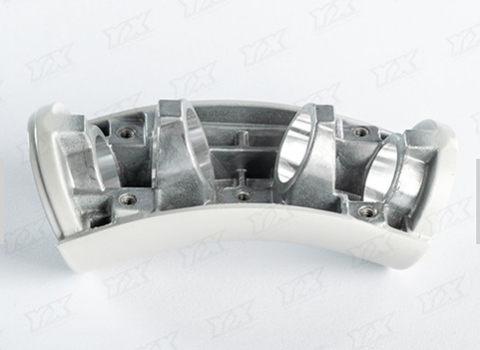
Aluminum die casting components are highly durable when properly engineered, finished, and quality-controlled. Their mechanical strength, corrosion resistance, thermal conductivity, and structural rigidity make them well-suited for a broad range of medical device applications. With advancements in vacuum die casting, alloy development, and surface treatment technologies, the long-term reliability of aluminum components continues to improve.
For manufacturers seeking lightweight, structurally sound, and cost-effective solutions in regulated healthcare environments, aluminum die casting remains a technically robust and commercially viable option.
Subscribe Below To Get Regular Updates From Dreamscape!
search
Dreamscape Machinery Technology Co., Ltd
No. 9 Huihe Road, Qianzhou Industrial Park, Huishan District, Wuxi City Jiangsu,P.R.China
Telephone: +86 0510-83382680
E-mail: zhangruyin124@gmail.com
Dreamscape Machinery Technology Co., Ltd
No. 9 Huihe Road, Qianzhou Industrial Park, Huishan District, Wuxi City Jiangsu,P.R.China
Telephone: +86 0510-83382680
We will contact you within 24 hours. ( WhatsApp/facebook:+86 0510-83382680)
