
Dreamscape
30 years of focus on aluminum die-casting parts
CHINESE
+86 13961758770
Dreamscape
30 years of focus on aluminum die-casting parts

Aluminum die casting has become a foundational manufacturing process in modern medical device design, particularly as the industry demands higher precision, lighter structures, enhanced durability, and regulatory reliability. From portable diagnostic systems to surgical platforms and imaging equipment, die-cast aluminum components provide structural integrity and production scalability that align with today’s medical engineering requirements.
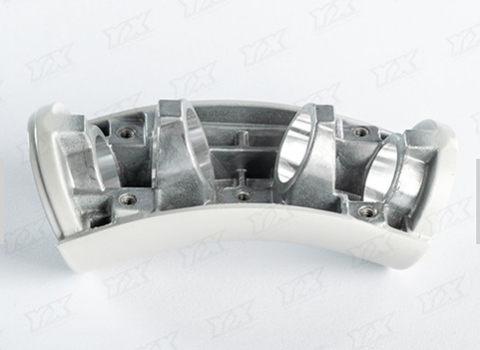
Modern healthcare technology—such as systems developed by GE HealthCare and Siemens Healthineers—relies heavily on complex enclosures, support frames, and heat-dissipating housings that must meet strict mechanical and safety standards. Aluminum die casting enables manufacturers to produce these components with repeatable accuracy while maintaining cost efficiency at scale.
Aluminum die casting is a high-pressure metal forming process in which molten aluminum alloy is injected into a hardened steel mold (die). The process supports tight dimensional tolerances, thin wall sections, and complex geometries that would be difficult or inefficient to achieve using machining or fabrication alone. For medical device designers, this translates into three major advantages: structural precision, weight reduction, and functional integration.
One of the primary roles aluminum die casting plays in medical device design is structural optimization. Diagnostic systems, infusion pumps, ventilators, and patient monitoring units require rigid frames to maintain calibration stability and minimize vibration. Die-cast aluminum alloys such as A380 or ADC12 offer high strength-to-weight ratios, allowing engineers to design lightweight yet mechanically robust housings. This is particularly important in portable and point-of-care devices, where ergonomics and mobility directly influence clinical usability.
Thermal management is another critical area where aluminum die casting adds value. Many medical devices incorporate power electronics, sensors, imaging modules, and processors that generate heat during operation. Aluminum’s high thermal conductivity enables die-cast housings to function as integrated heat sinks. Instead of adding secondary cooling components, designers can engineer fins, channels, and thermal pathways directly into the casting. This reduces part count, lowers assembly complexity, and improves reliability by minimizing potential failure points.
Electromagnetic shielding is also a significant design consideration. Medical electronics must operate in environments sensitive to electromagnetic interference (EMI), and compliance with international standards such as IEC 60601 is mandatory. Die-cast aluminum enclosures provide inherent EMI and radio frequency interference (RFI) shielding, helping manufacturers meet regulatory requirements without additional shielding materials.
Precision and repeatability are essential in the medical sector. Devices used in surgical theaters, diagnostic labs, or intensive care units cannot tolerate dimensional drift or mechanical instability. High-pressure die casting delivers consistent tolerances across high production volumes, supporting statistical process control and quality assurance systems aligned with ISO 13485. With appropriate tooling design and process validation, manufacturers can achieve excellent Cp and Cpk values, which are critical in regulated industries.
Biocompatibility and surface finishing options further expand the applicability of aluminum die casting in medical environments. While aluminum components are typically not implanted, they frequently serve as external housings or structural parts that must withstand repeated sterilization, cleaning agents, and disinfectants. Surface treatments such as powder coating, anodizing, or chromate conversion improve corrosion resistance and chemical durability while maintaining a clean, professional appearance suitable for clinical settings.
Cost efficiency across the product lifecycle is another strategic benefit. Although die tooling requires upfront investment, the per-unit cost decreases significantly in medium- to high-volume production. For medical device companies scaling global distribution, this economic model supports competitive pricing without sacrificing quality. Additionally, the near-net-shape nature of die casting reduces secondary machining and material waste, aligning with sustainability initiatives increasingly emphasized across healthcare supply chains.
Design flexibility also plays a decisive role. Engineers can consolidate multiple components into a single die-cast structure, integrating mounting bosses, cable routing channels, threaded inserts, and alignment features directly into the part. This reduces assembly time and improves structural reliability. In modular systems—such as imaging consoles or laboratory analyzers—this integration simplifies maintenance and part replacement strategies.
Sustainability is an emerging priority in medical manufacturing. Aluminum is highly recyclable without significant loss of mechanical properties. Many die-casting operations incorporate recycled aluminum feedstock, reducing carbon footprint compared to other structural metals. As healthcare systems increasingly evaluate environmental impact, the use of recyclable structural materials supports corporate ESG objectives.
Looking ahead, the integration of aluminum die casting with digital engineering tools such as simulation-driven mold flow analysis and finite element modeling continues to enhance performance optimization. Predictive design allows engineers to analyze stress distribution, thermal gradients, and potential porosity before tooling production begins. This data-driven approach shortens development cycles and improves first-pass yield, which is particularly valuable in regulated product development timelines.
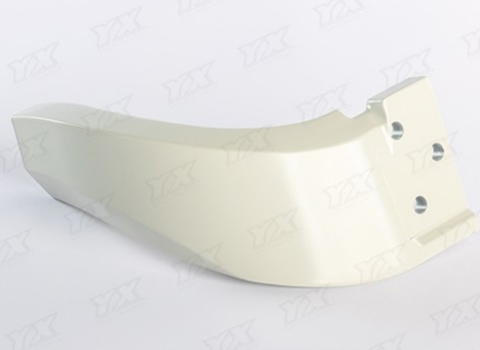
In summary, aluminum die casting plays a multifaceted role in modern medical device design. It delivers structural strength, lightweight construction, thermal efficiency, electromagnetic shielding, and production scalability. By enabling complex geometries with high repeatability and cost control, the process supports both innovation and regulatory compliance. As medical technology continues to advance toward smarter, more compact, and globally distributed solutions, aluminum die casting will remain a critical manufacturing strategy underpinning performance, safety, and sustainability in healthcare engineering.
Subscribe Below To Get Regular Updates From Dreamscape!
search
Dreamscape Machinery Technology Co., Ltd
No. 9 Huihe Road, Qianzhou Industrial Park, Huishan District, Wuxi City Jiangsu,P.R.China
Telephone: +86 0510-83382680
E-mail: zhangruyin124@gmail.com
Dreamscape Machinery Technology Co., Ltd
No. 9 Huihe Road, Qianzhou Industrial Park, Huishan District, Wuxi City Jiangsu,P.R.China
Telephone: +86 0510-83382680
We will contact you within 24 hours. ( WhatsApp/facebook:+86 0510-83382680)