
Dreamscape
30 years of focus on aluminum die-casting parts
CHINESE
+86 13961758770
Dreamscape
30 years of focus on aluminum die-casting parts

Aluminum die casting has become a core manufacturing technology in the structural components of photovoltaic (PV) systems, particularly in the production of high-performance photovoltaic brackets. As global solar installations expand in scale and move into increasingly demanding environments—coastal zones, deserts, high-wind regions, and heavy snow areas—the durability requirements for mounting structures have intensified. Aluminum die casting offers a technically robust solution that enhances structural integrity, corrosion resistance, dimensional accuracy, and long-term mechanical performance.
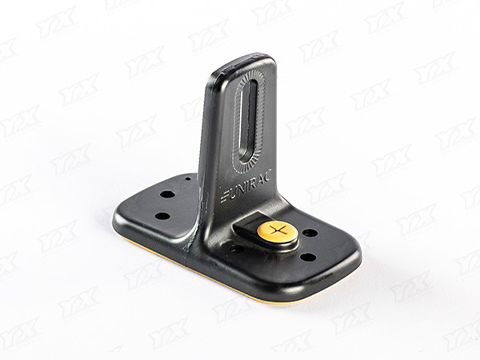
Photovoltaic brackets are critical load-bearing components in solar energy systems. They support PV modules, maintain optimal tilt angles, and transfer environmental loads—wind uplift, snow pressure, thermal stress—into the building structure or ground foundation. Inadequate bracket durability can lead to misalignment, vibration-induced fatigue, galvanic corrosion, and, in extreme cases, structural failure. For this reason, material selection and manufacturing processes are central to system reliability and lifecycle cost control.
Aluminum die casting improves the durability of photovoltaic brackets primarily through superior material characteristics. Aluminum alloys commonly used in die casting, such as ADC12 or Al-Si-Mg systems, provide an optimal balance of tensile strength, yield strength, and ductility. These alloys exhibit excellent fatigue resistance compared to thin roll-formed steel or lower-grade extruded profiles. The die casting process also enables controlled solidification, producing a dense microstructure with reduced porosity when properly engineered, which directly improves mechanical stability under cyclic loads.
Corrosion resistance is another critical factor. Photovoltaic installations often operate in aggressive environments—high humidity, salt spray, acid rain, or industrial atmospheres. Aluminum naturally forms a stable oxide layer (Al₂O₃) that protects the substrate from further oxidation. When combined with surface treatments such as anodizing or powder coating, die-cast aluminum brackets achieve long-term corrosion resistance without the risk of red rust commonly associated with carbon steel. This passive protection mechanism significantly extends service life and reduces maintenance requirements.
Structural optimization is an additional advantage enabled by aluminum die casting. Unlike simple extrusion or stamping processes, die casting allows complex geometries, ribbing structures, reinforcement webs, and integrated mounting features to be formed in a single operation. Engineers can incorporate finite element analysis (FEA)-driven designs directly into the mold cavity, optimizing load paths and minimizing stress concentration. The result is higher strength-to-weight ratios and improved resistance to deformation under extreme wind loads. Lightweight yet rigid brackets reduce overall system dead load, which is especially important for rooftop installations.
Dimensional precision also contributes to durability. High-pressure die casting ensures tight tolerances and repeatability, which reduces installation misalignment and mechanical stress during assembly. Poorly aligned brackets can introduce unintended bending moments and long-term fatigue. Accurate cast components improve connection reliability, especially when paired with stainless steel fasteners and anti-galvanic isolation measures.
Thermal performance further enhances long-term stability. Aluminum has a high thermal conductivity and a predictable coefficient of thermal expansion. In outdoor environments where temperature fluctuations can exceed 60°C between day and night, consistent expansion behavior prevents micro-cracking and loosening of joints. Properly designed die-cast brackets accommodate thermal cycling without structural degradation.
Compared with alternative materials such as hot-dip galvanized steel, aluminum die casting offers improved resistance to coating damage. Galvanized layers can be compromised during transport or installation, leading to localized corrosion that propagates over time. In contrast, aluminum’s inherent corrosion resistance remains effective even if the surface is scratched, providing a more resilient long-term solution.
From a lifecycle perspective, aluminum die-cast photovoltaic brackets support sustainability goals. Aluminum is fully recyclable without significant degradation of mechanical properties. Many die-cast components are produced using recycled aluminum, reducing embodied carbon. Moreover, the extended service life—often matching or exceeding the 25–30 year operational lifespan of modern solar modules—minimizes replacement cycles and associated environmental impact.
Quality control in aluminum die casting also plays a decisive role. Advanced processes such as vacuum-assisted die casting, X-ray inspection, and mechanical property testing ensure structural integrity and minimize internal defects. When manufacturers adhere to international standards for structural aluminum components, the resulting brackets meet stringent performance requirements for large-scale solar farms and distributed generation systems.
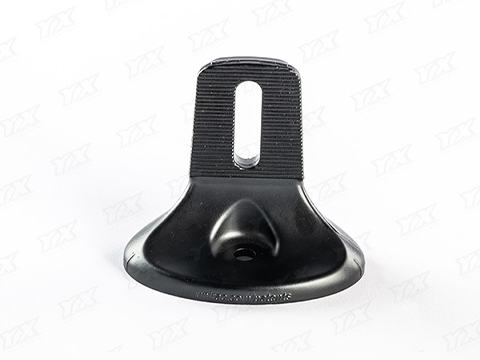
In summary, aluminum die casting enhances the durability of photovoltaic brackets through a combination of superior mechanical properties, intrinsic corrosion resistance, precision manufacturing, and structural design flexibility. As solar energy systems continue to expand into harsher environments and larger capacities, die-cast aluminum brackets provide a technically sound, economically efficient, and long-lasting mounting solution. For EPC contractors, system integrators, and solar developers seeking long-term reliability and reduced maintenance costs, aluminum die casting represents a strategically advantageous manufacturing approach in photovoltaic structural engineering.
Subscribe Below To Get Regular Updates From Dreamscape!
search
Dreamscape Machinery Technology Co., Ltd
No. 9 Huihe Road, Qianzhou Industrial Park, Huishan District, Wuxi City Jiangsu,P.R.China
Telephone: +86 0510-83382680
E-mail: zhangruyin124@gmail.com
Dreamscape Machinery Technology Co., Ltd
No. 9 Huihe Road, Qianzhou Industrial Park, Huishan District, Wuxi City Jiangsu,P.R.China
Telephone: +86 0510-83382680
We will contact you within 24 hours. ( WhatsApp/facebook:+86 0510-83382680)