
Dreamscape
30 years of focus on aluminum die-casting parts
CHINESE
+86 13961758770
Dreamscape
30 years of focus on aluminum die-casting parts

Aluminum die casting is widely adopted in the medical device industry because it delivers a rare combination of dimensional precision, mechanical performance, corrosion resistance, and manufacturability. For sterilizable medical device components—where regulatory compliance, repeatability, and material stability under harsh sterilization conditions are mandatory—aluminum die casting offers distinct engineering and economic advantages.
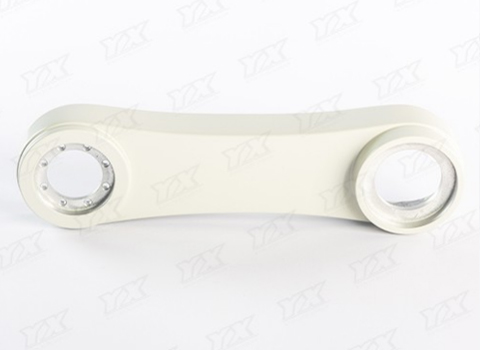
Sterilizable medical devices must tolerate repeated exposure to autoclave steam cycles, ethylene oxide (EtO) gas, hydrogen peroxide plasma, and in some cases gamma irradiation. These sterilization modalities impose thermal, chemical, and moisture stresses that can degrade unsuitable materials. Aluminum alloys used in high-pressure die casting (HPDC), particularly Al-Si and Al-Si-Mg systems, demonstrate stable microstructures, low porosity (when process-controlled), and strong resistance to oxidation and corrosion. The naturally forming aluminum oxide layer provides a passive barrier that enhances corrosion resistance during high-humidity steam sterilization cycles.
From a mechanical engineering standpoint, aluminum die casting enables high strength-to-weight ratios. In portable diagnostic systems, infusion pumps, surgical power tools, and imaging accessories, lightweight construction directly improves ergonomics and handling while maintaining structural rigidity. Compared with stainless steel, die-cast aluminum reduces mass significantly while still meeting mechanical load requirements. This makes it particularly valuable for housings, frames, brackets, and structural enclosures that must endure repeated cleaning and sterilization without deformation.
Dimensional precision is another decisive factor. Modern die casting tooling achieves tight tolerances and excellent surface finishes directly out of the mold, reducing secondary machining. Medical device manufacturers operate under strict quality systems such as ISO 13485 and FDA QSR requirements; process consistency is essential. High-pressure die casting supports high-volume production with strong repeatability, which simplifies validation protocols and statistical process control (SPC). Near-net-shape capability also reduces assembly complexity by integrating multiple features—mounting bosses, ribs, heat dissipation fins—into a single casting.
Thermal management performance further explains the preference for aluminum. Many sterilizable devices incorporate electronics, power supplies, or sensors that generate heat during operation. Aluminum’s thermal conductivity, typically around 150–180 W/m·K for common die-cast alloys, facilitates efficient heat dissipation. This property is advantageous in diagnostic analyzers, imaging modules, and energy-based surgical systems where temperature stability affects device reliability and accuracy.
Surface engineering compatibility is another advantage. Aluminum die-cast components can undergo anodizing, powder coating, e-coating, or antimicrobial surface treatments. Hard anodizing enhances surface hardness and wear resistance while preserving corrosion resistance under sterilization cycles. Medical-grade powder coatings can provide chemical resistance against disinfectants such as isopropyl alcohol, sodium hypochlorite, and quaternary ammonium compounds. This adaptability allows manufacturers to tailor surfaces to meet both functional and aesthetic requirements in clinical environments.
Manufacturing efficiency and scalability also support aluminum die casting in medical applications. Once tooling is developed, cycle times are short and unit costs decrease significantly at scale. For established devices with stable designs, die casting offers cost-effective mass production compared with CNC machining from billet or investment casting. Additionally, modern vacuum-assisted die casting techniques reduce internal porosity, improving pressure tightness and structural integrity—important for components that may be exposed to fluid ingress risks during cleaning or sterilization.
Regulatory and biocompatibility considerations must be addressed carefully. While aluminum is generally used for non-implantable external components, its compliance with standards such as ISO 10993 (when applicable) can be validated through proper material selection and finishing. In most cases, die-cast aluminum is used for structural or housing components rather than direct patient-contact implants. The material’s recyclability also aligns with sustainability initiatives increasingly emphasized by global healthcare systems.
Comparatively, alternative materials such as engineering plastics or magnesium alloys have limitations. High-performance polymers may degrade under repeated high-temperature steam sterilization. Magnesium alloys offer lightweight properties but typically require more aggressive corrosion protection strategies. Stainless steel, although highly corrosion-resistant, increases device weight and machining cost. Aluminum die casting occupies a balanced position in this materials selection matrix.
Industry leaders across sectors, including diversified healthcare manufacturers such as Medtronic and Johnson & Johnson, commonly integrate lightweight metal housings and structural components into non-implantable device systems, reflecting broader industry acceptance of aluminum-based solutions in appropriate applications.
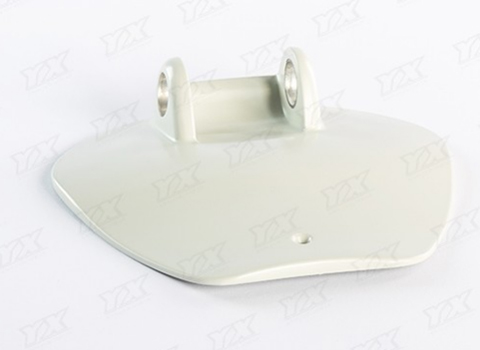
In summary, aluminum die casting is used for sterilizable medical device components because it combines corrosion resistance, structural performance, lightweight characteristics, thermal conductivity, surface treatment flexibility, and high-volume manufacturability. When supported by proper alloy selection, process control, and validation testing, it meets the rigorous technical and regulatory demands of modern medical device engineering. For manufacturers seeking durability, precision, and cost efficiency in sterilizable equipment, aluminum die casting remains a strategically advantageous solution.
Subscribe Below To Get Regular Updates From Dreamscape!
search
Dreamscape Machinery Technology Co., Ltd
No. 9 Huihe Road, Qianzhou Industrial Park, Huishan District, Wuxi City Jiangsu,P.R.China
Telephone: +86 0510-83382680
E-mail: zhangruyin124@gmail.com
Dreamscape Machinery Technology Co., Ltd
No. 9 Huihe Road, Qianzhou Industrial Park, Huishan District, Wuxi City Jiangsu,P.R.China
Telephone: +86 0510-83382680
We will contact you within 24 hours. ( WhatsApp/facebook:+86 0510-83382680)