
Dreamscape
30 years of focus on aluminum die-casting parts
CHINESE
+86 13961758770
Dreamscape
30 years of focus on aluminum die-casting parts
An aluminum die casting coupling is a mechanical component used to connect two rotating shafts for torque transmission. It is manufactured through the aluminum die casting process, where molten aluminum alloy is injected into a precision steel mold under high pressure. This method enables the production of complex geometries with tight dimensional tolerances, making the coupling suitable for various industrial applications.
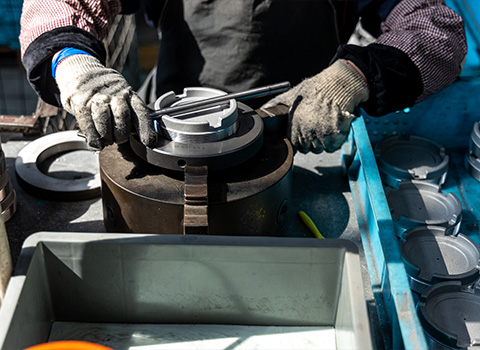
Manufacturing Process and Material Characteristics
In aluminum die casting, commonly used alloys such as ADC12 or A380 offer a balanced combination of mechanical strength, castability, and corrosion resistance. The high-pressure injection process ensures good surface finish and structural consistency. Compared with machining from solid billet, die casting improves material utilization and supports high-volume production.
The resulting coupling body can integrate structural features such as hubs, flanges, keyways, or set-screw holes directly into the casting. Post-casting operations, including CNC machining and surface treatment, are typically performed to meet assembly and performance requirements.
Functional Design and Performance
An aluminum die casting coupling serves several core functions:
Torque Transmission: It transfers rotational power from a driving shaft to a driven shaft with minimal loss.
Misalignment Compensation: Depending on the design, certain coupling types accommodate angular, radial, or axial misalignment.
Vibration Reduction: Some configurations help reduce shock loads and vibration in mechanical systems.
Because aluminum alloys have a lower density than steel, these couplings contribute to weight reduction in equipment without compromising structural integrity under moderate loads.
Typical Applications
Aluminum die casting couplings are widely used in electric motors, pumps, agricultural machinery, ventilation systems, and light industrial equipment. Their corrosion resistance makes them suitable for environments with humidity or exposure to mild chemicals.
In automation systems and small-scale mechanical assemblies, aluminum couplings are often selected for their balance of strength, weight, and cost efficiency.
Advantages Over Other Manufacturing Methods
Compared with sand casting or forging, aluminum die casting offers:
High dimensional repeatability
Smooth surface finish
Reduced secondary machining
Suitability for mass production
These advantages make aluminum die casting couplings a practical solution for manufacturers seeking consistent quality and scalable output.
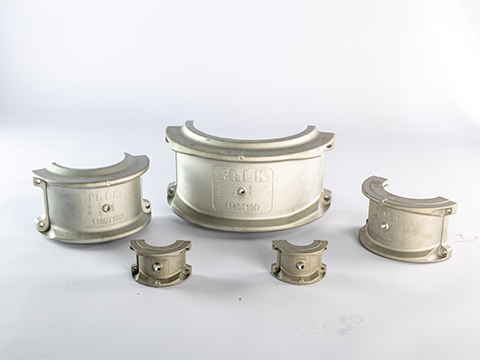
Conclusion
An aluminum die casting coupling is a precision-engineered component designed for reliable shaft connection and torque transmission. By combining the structural benefits of aluminum alloys with the efficiency of die casting technology, it provides a lightweight, durable, and cost-effective solution for a wide range of mechanical systems.
Subscribe Below To Get Regular Updates From Dreamscape!
search
Dreamscape Machinery Technology Co., Ltd
No. 9 Huihe Road, Qianzhou Industrial Park, Huishan District, Wuxi City Jiangsu,P.R.China
Telephone: +86 0510-83382680
E-mail: zhangruyin124@gmail.com
Dreamscape Machinery Technology Co., Ltd
No. 9 Huihe Road, Qianzhou Industrial Park, Huishan District, Wuxi City Jiangsu,P.R.China
Telephone: +86 0510-83382680
We will contact you within 24 hours. ( WhatsApp/facebook:+86 0510-83382680)
